

Product Design
Product Design
Practical, user-grounded design for modern products
Mobile apps
Web apps
Websites
Other products
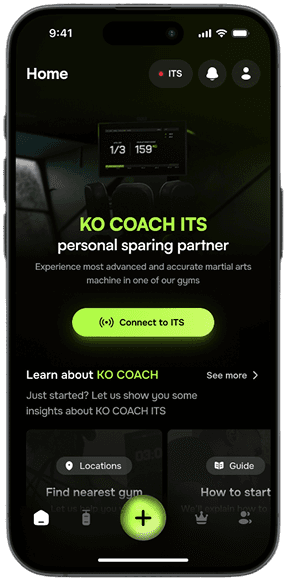
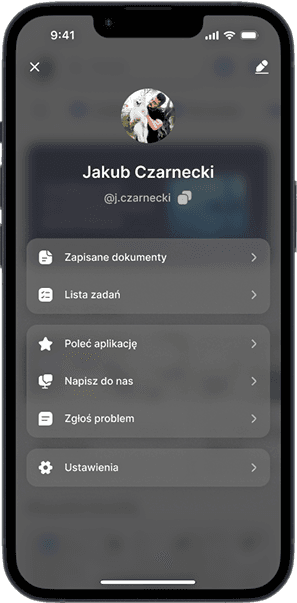
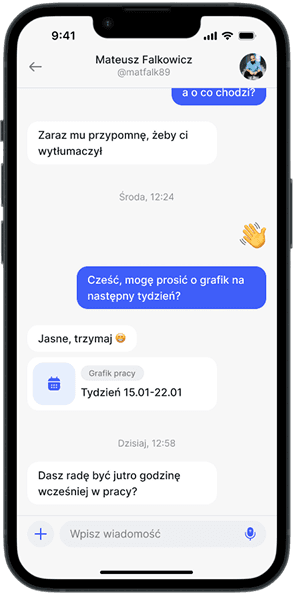
When I design mobile apps, I start by understanding the moments in which people actually reach for their phones and what they expect to accomplish.
I pay close attention to navigation patterns, gestures, and system behaviors so the experience feels familiar without requiring explanations.
Throughout the process, I consider engineering constraints to avoid designs that look good but are unrealistic to ship. The result is a mobile app that feels quick, predictable, and grounded in real user behavior.
Mobile apps
Web apps
Websites
Other products
When I design mobile apps, I start by understanding the moments in which people actually reach for their phones and what they expect to accomplish.
I pay close attention to navigation patterns, gestures, and system behaviors so the experience feels familiar without requiring explanations.
Throughout the process, I consider engineering constraints to avoid designs that look good but are unrealistic to ship. The result is a mobile app that feels quick, predictable, and grounded in real user behavior.
Mobile apps
Web apps
Websites
Other products
When I design mobile apps, I start by understanding the moments in which people actually reach for their phones and what they expect to accomplish.
I pay close attention to navigation patterns, gestures, and system behaviors so the experience feels familiar without requiring explanations.
Throughout the process, I consider engineering constraints to avoid designs that look good but are unrealistic to ship. The result is a mobile app that feels quick, predictable, and grounded in real user behavior.
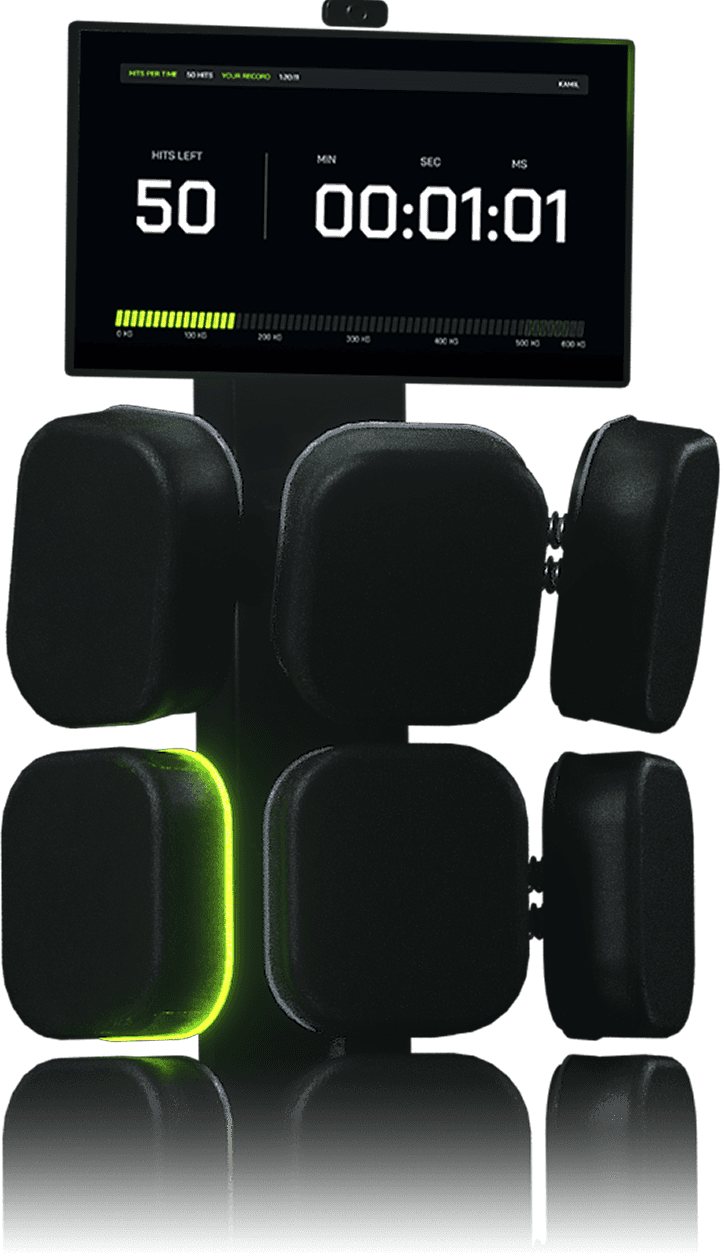
I design digital products across mobile, web, and specialized interfaces by focusing on clear structure, real user behaviors, and solutions that scale. My work centers on simplifying decisions, defining systems that make sense, and aligning the design with engineering constraints. The outcome is a coherent, reliable product experience that feels intuitive no matter the platform.
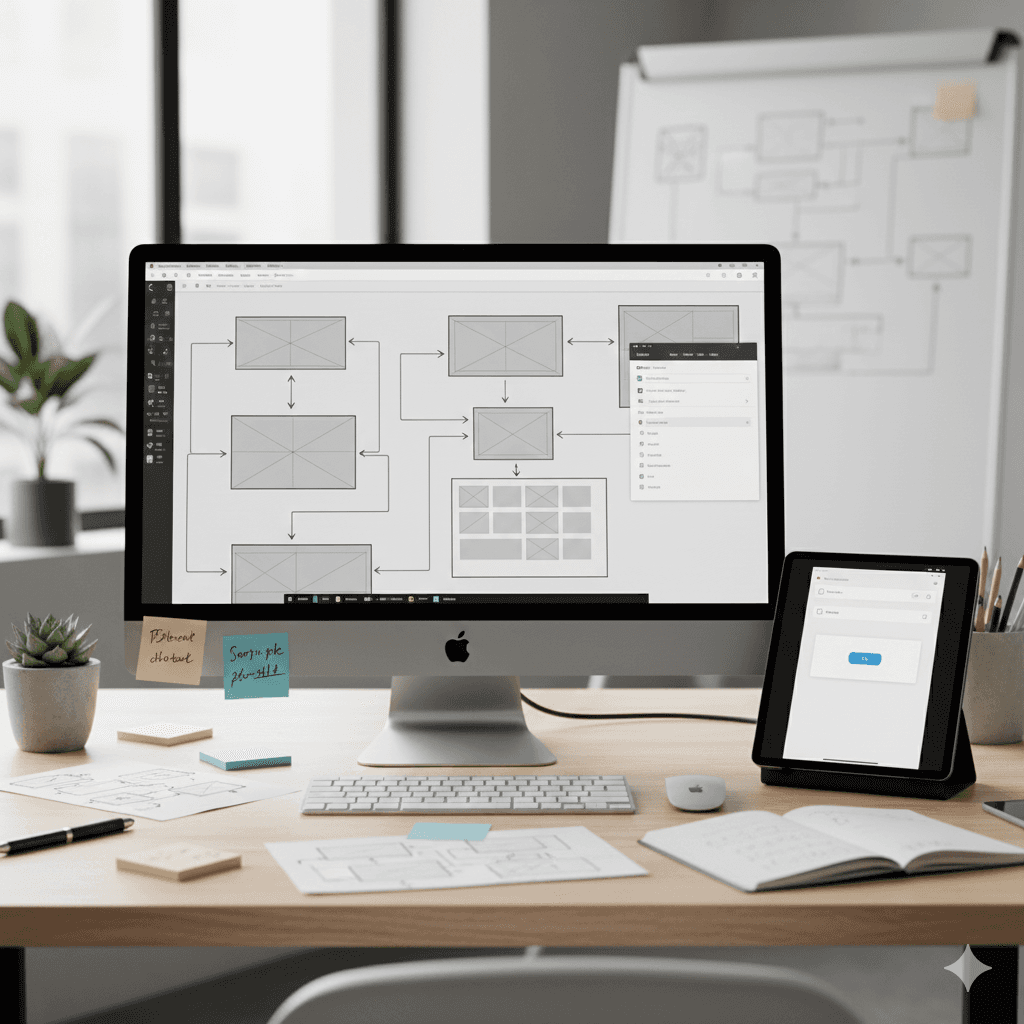
Relating on experience
I rely on experience built across many types of products, platforms, and audiences. Working in different environments has taught me how to adjust my approach without losing clarity or structure.
I’m comfortable switching between domains, from consumer apps to internal tools, and shaping each product around the realities of its users. This versatility helps me spot patterns, avoid unnecessary complexity, and make decisions that hold up in practice. In the end, it lets me design solutions that fit the context rather than force a single way of thinking.
Dedicated approach
I don’t rely on a single framework to guide my work. Each project has its own constraints, pace, and level of uncertainty, and the process needs to adapt to that reality.
I shape my approach based on what the team needs, what the problem actually is, and how quickly decisions have to be made. Sometimes that means a structured, research-heavy path, other times it’s about rapid iteration and tight collaboration. The goal is always the same: a process that fits the project instead of forcing the project to fit the process.
Interested?
Let's talk
Interested?
Let's talk
Interested?
Let's talk
Design systems
Design systems
Building consistent, reusable foundations for teams
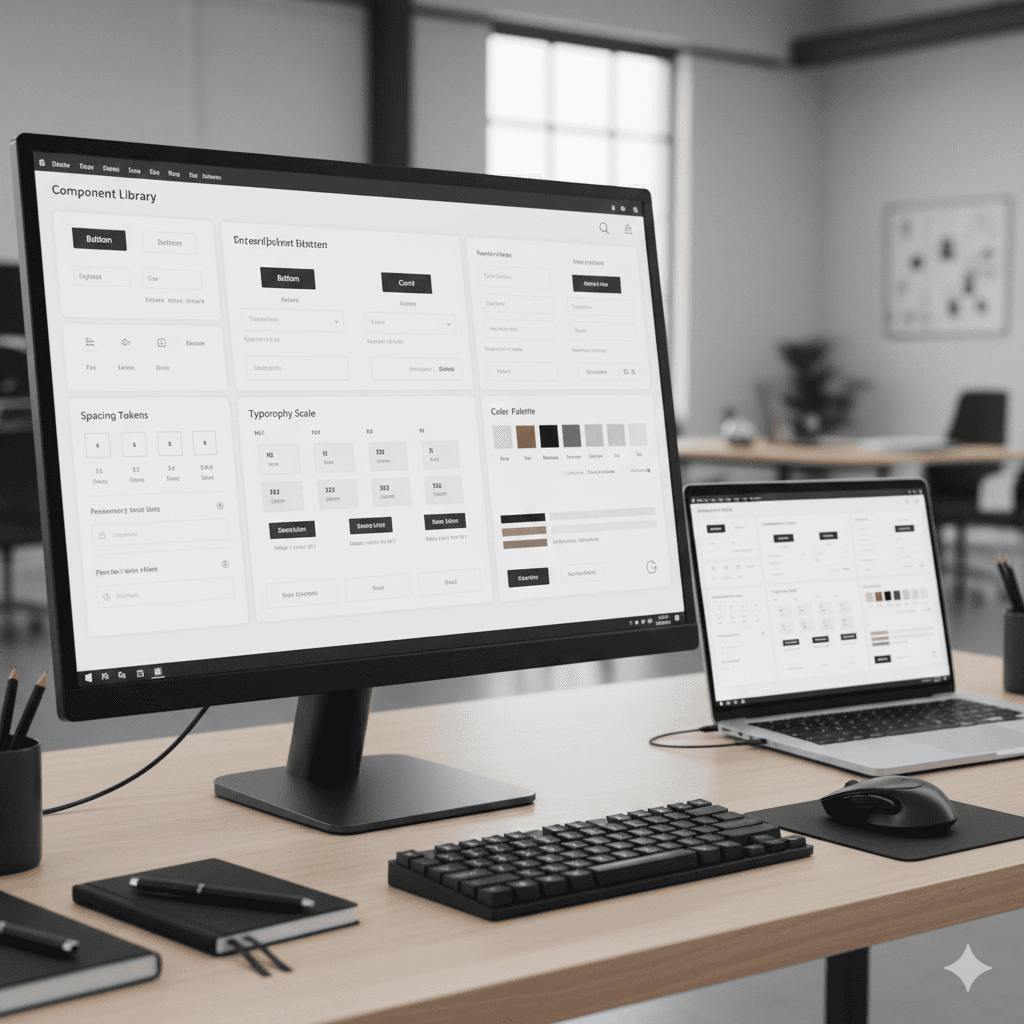
Responding to your needs
I design systems that are shaped around the realities of your organization. I understand the difference between a large-scale, multi-platform system meant to support complex CMS workflows and a lightweight one built for a focused mobile app.
Each requires a different level of structure, governance, and component depth. My role is to find the balance that keeps teams efficient without over-engineering the system. The result is a design system that fits your product ecosystem and grows at the right pace.
Increasing efficiency
For me, the value of a design system starts with reusability. When components are predictable and well-defined, teams spend less time reinventing patterns and more time solving actual product problems.
A strong system reduces inconsistencies, speeds up delivery, and makes collaboration between design and engineering far smoother. I focus on creating structures that remove repetitive work without limiting creativity. The result is a workflow where interfaces come together faster, cleaner, and with far fewer surprises.
Interested?
Let's talk
Interested?
Let's talk
Responding to your needs
I design systems that are shaped around the realities of your organization. I understand the difference between a large-scale, multi-platform system meant to support complex CMS workflows and a lightweight one built for a focused mobile app.
Each requires a different level of structure, governance, and component depth. My role is to find the balance that keeps teams efficient without over-engineering the system. The result is a design system that fits your product ecosystem and grows at the right pace.
Increasing efficiency
For me, the value of a design system starts with reusability. When components are predictable and well-defined, teams spend less time reinventing patterns and more time solving actual product problems.
A strong system reduces inconsistencies, speeds up delivery, and makes collaboration between design and engineering far smoother. I focus on creating structures that remove repetitive work without limiting creativity. The result is a workflow where interfaces come together faster, cleaner, and with far fewer surprises.
Interested?
Let's talk
Building design teams
Building design teams
Shaping teams through roles, not templates

Playing to Individual Strengths
When building design teams, I focus on identifying what each person does best and using that as a foundation for the whole group. Inspired by team sports, especially football, I believe strong teams are built by understanding roles rather than forcing uniformity.
Instead of expecting everyone to work the same way, I shape collaboration around available skills, experience, and decision-making styles. This approach helps teams operate more confidently and efficiently. The strategy is always adjusted to the people involved, not the other way around.
Selecting Team Members Beyond Skill Sets
I don’t assess team members based on skills alone. When building or expanding a design team, I consider psychological traits, personality, communication style, learning speed, and individual predispositions. These factors often have a bigger impact on long-term collaboration than tools or years of experience.
A well-balanced team is one where people complement each other, not compete for the same space. This perspective helps create teams that are resilient, adaptable, and capable of growing together.
Interested?
Let's talk
Interested?
Let's talk
Playing to individual strengths
When building design teams, I focus on identifying what each person does best and using that as a foundation for the whole group. Inspired by team sports, especially football, I believe strong teams are built by understanding roles rather than forcing uniformity.
Instead of expecting everyone to work the same way, I shape collaboration around available skills, experience, and decision-making styles. This approach helps teams operate more confidently and efficiently. The strategy is always adjusted to the people involved, not the other way around.
Selecting team members beyond skill sets
I don’t assess team members based on skills alone. When building or expanding a design team, I consider psychological traits, personality, communication style, learning speed, and individual predispositions. These factors often have a bigger impact on long-term collaboration than tools or years of experience.
A well-balanced team is one where people complement each other, not compete for the same space. This perspective helps create teams that are resilient, adaptable, and capable of growing together.
Interested?
Let's talk
Workflow improvement
Workflow improvement
Processes shaped by context, not theory

Frameworks Shaped Around the Project
I adapt the way of working to the circumstances rather than forcing a fixed framework onto every project. Each product comes with its own constraints, expectations, and pace, and the process needs to reflect that.
I take into account the company’s culture, team maturity, and delivery goals before defining how the work should flow. Sometimes structure is critical; other times flexibility matters more. The framework is adjusted to support progress, not to satisfy theory.
The Product Comes First
For me, a framework is a means, not the goal. I don’t believe in rigid adherence to theory, because no method creates great products on its own. What matters is how well the process helps the team think, decide, and build.
I’m comfortable changing or combining approaches when it leads to better outcomes. In the end, the framework disappears, and the product remains.
Interested?
Let's talk
Interested?
Let's talk
Frameworks shaped around the project
I adapt the way of working to the circumstances rather than forcing a fixed framework onto every project. Each product comes with its own constraints, expectations, and pace, and the process needs to reflect that.
I take into account the company’s culture, team maturity, and delivery goals before defining how the work should flow. Sometimes structure is critical; other times flexibility matters more. The framework is adjusted to support progress, not to satisfy theory.
The product comes first
For me, a framework is a means, not the goal. I don’t believe in rigid adherence to theory, because no method creates great products on its own. What matters is how well the process helps the team think, decide, and build.
I’m comfortable changing or combining approaches when it leads to better outcomes. In the end, the framework disappears, and the product remains.
Interested?
Let's talk